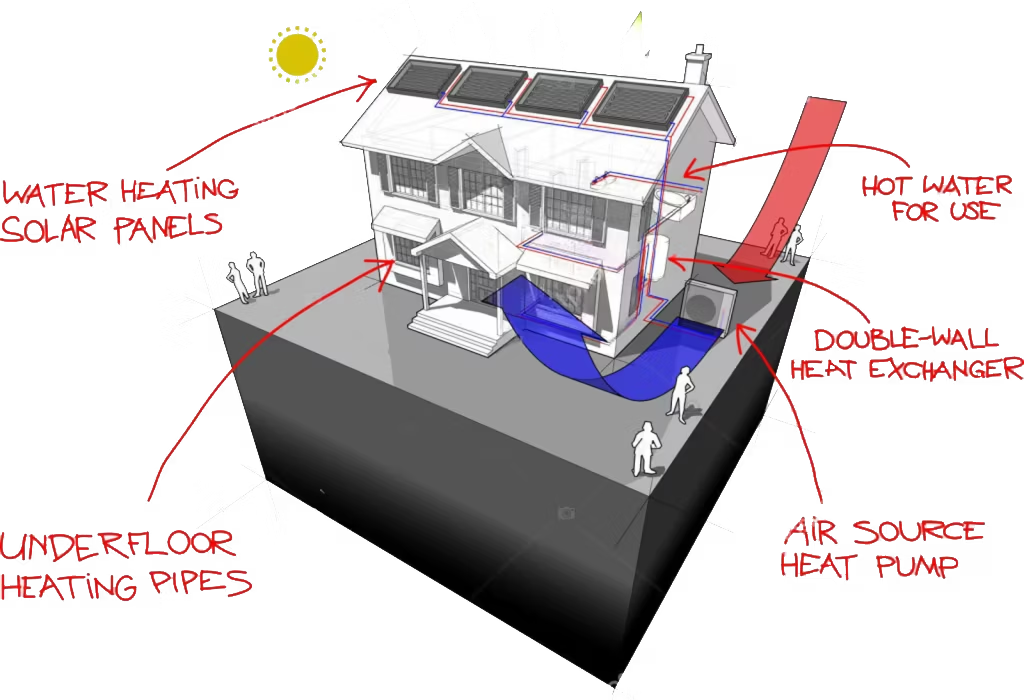
1. Thermodynamics Fundamentals: How Does a Heat Pump Work?
The quickest way to understand heat pump technology is to imagine it as a "heat transporter". While traditional combi boilers or electric heaters produce energy from scratch by burning fuel or passing current through a resistor, the heat pump "collects" the energy in the external environment by taking advantage of the zeroth law of thermodynamics.
1.1. Carnot Cycle and the Principle of Reversible Heat Transfer
The operating principle of heat pumps is based on the Carnot Cycle, defined by Nicolas Léonard Sadi Carnot in the 19th century. The system draws heat from a low temperature source and moves this heat to a higher temperature level using mechanical work (with the help of a compressor). "The theoretical maximum efficiency of the heat pump is limited to the ideal Carnot cycle and is expressed by the formula:"
Here is the hot side and is the absolute temperature of the source side (Kelvin). The key concept here is Enthalpy change. As the refrigerant passes between the evaporator fins, it absorbs the heat of the outside air and turns from liquid to gas. The "latent heat" absorbed during this phase change is the main source of the efficiency of the system.
1.2. Heart of the System: Compressor Technologies (Difference between Inverter and EVI)
The performance of a heat pump directly depends on the efficiency of the compressor. Two technologies stand out in modern systems:
- DC Inverter Technology: Unlike old generation compressors that operate at a fixed speed and are constantly on and off, Inverter compressors adjust their speed according to the building load. This saves up to 30% in annual energy consumption.
- EVI (Enhanced Vapor Injection): Advanced Vapor Injection prevents the system from clogging, especially in extreme cold conditions of -15°C and below. By injecting gas into the compressor in the middle stage, it minimizes capacity loss at low temperatures.
1.3. The Role of Refrigerants: Transition from R32 to Natural Refrigerant R290
The biggest confusion for heat pump buyers is the "gas inside" issue. In technical marketing jargon, this is the GWP (Global Warming Potential) value of the system.
- R410A: Old standard. GWP value is 2088. Will be banned soon.
- R32: Current industry standard. GWP value is 675. It is 68% more environmentally friendly and efficient than R410A.
- R290 (Propane): The technology of the future. GWP value is only 3.
Why is it important? R290 is not only environmentally friendly, but can also reach leaving water temperatures as high as 75°C. This is the key to allowing the heat pump to be used as a "plug-and-play" retrofit in homes with old-style radiators.
2. Performance Metrics: Critical Differences Between COP, SCOP and SEER
Marketers often try to impress customers by saying "COP 5.0". However, we technical people know that this is measured in a laboratory environment (usually +7°C outside air)** and we always check the measurement conditions.
2.1. Why is it misleading to just look at the COP value?
COP (Coefficient of Performance) is a snapshot. Although measurement standards have been determined in the industry, COP values measured at different indoor and outdoor temperatures can be used as a marketing element. However, what is important for a user is "what will come of the whole winter bill". This is where SCOP(Seasonal COP) comes into play.
SCOP is the average efficiency of the system over an entire heating season (at different outdoor temperatures). When comparing the efficiencies of devices, SCOP values, which are more important than COP values in the device data sheet, should be taken into consideration.
2.2. Seasonal Coefficient of Performance (SCOP) and Climate Zones
The biggest mistake in marketing strategy is to offer the promise of efficiency to a user in Erzurum as offered to a user in Antalya. Because heat pumps are outsourced, efficiency depends directly on the outdoor temperature map.
- Average Climate (Strassburg): Region where standard tests are performed.
- Hotter Climate (Athens/Antalya): The region where SCOP values exceed 5.5 and the system pays for itself the fastest.
- Colder Climate (Helsinki/Erzurum): The region where the design should be made according to the "Bivalence Point" and the efficiency is reduced to the 2.5 - 3.0 band.
2.3. Capacity Loss Analysis at Low Ambient Temperatures
In air source heat pumps (ASHP), as the outdoor temperature decreases, the heat demand of the building increases, but the heat pump capacity of the system physically decreases. This inverse relationship gives rise to a critical threshold called the "Bivalence Point".
- Defrost Cycle: When the outdoor unit battery gets frosty, the system temporarily stops heating and uses the energy to defrost the outdoor unit.
- Solution: Here, measures such as "smart defrost" algorithms and "resistive pan heaters" added to the bottom of the system prove the quality of the product.
3. Heat Pump Classification According to Source Types
Heat pump selection is directly related to a building's geographical location and ground structure. In marketing parlance, every system is "best," but in engineering parlance, every system has an optimum operating range.
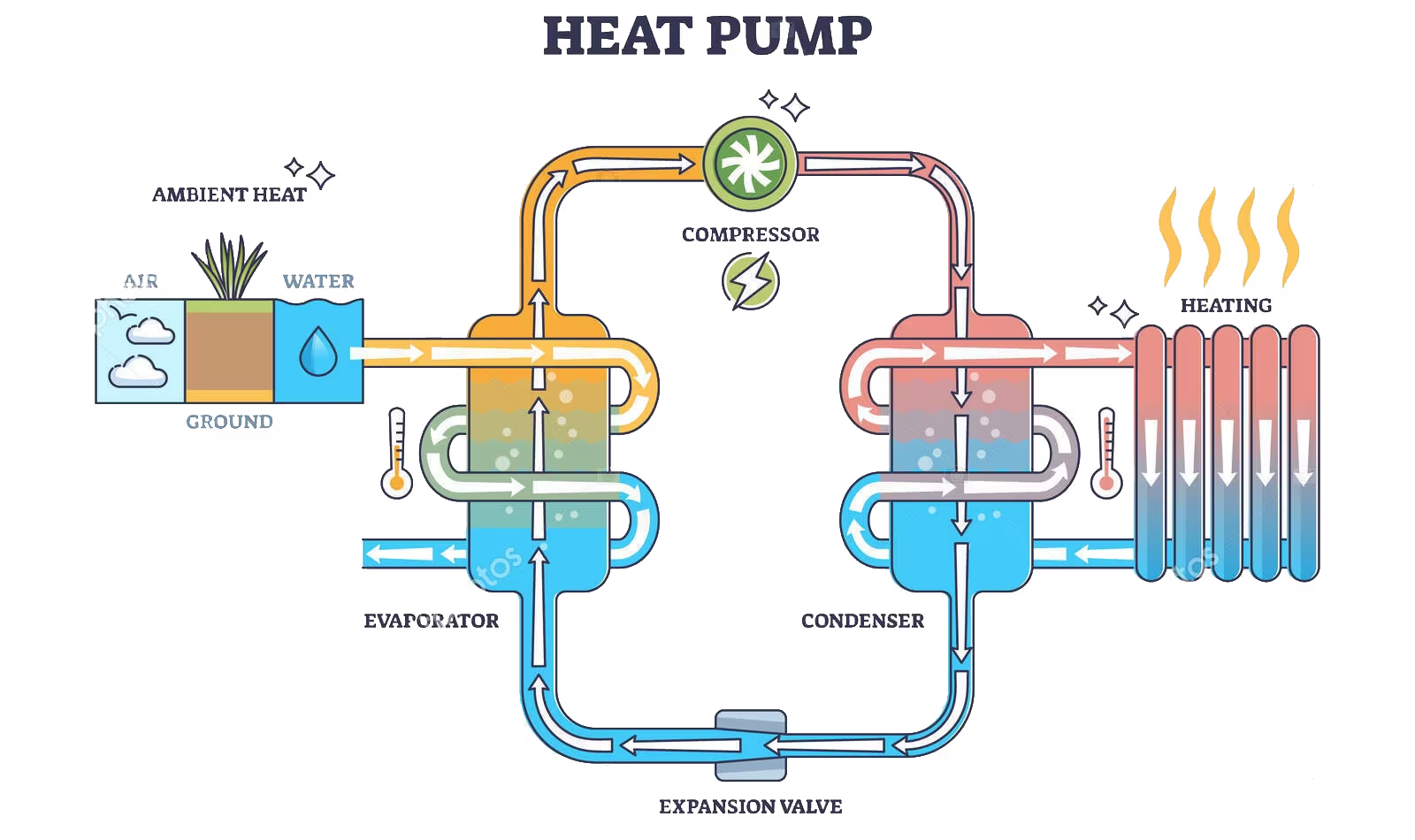
3.1. Air Source Heat Pumps (ASHP): Balance of Ease of Installation and Cost
Air source systems account for more than 80% of the market share today. They absorb energy by passing ambient air over the evaporator through the fans in the outdoor unit.
- Technical Advantage: Installation takes only 1 day, does not require excavation.
- Critical Point: In humid climates, the frequency of "Defrost" may affect efficiency. At this point, the heater cable management and software quality in the bottom tray of the device come into play.
3.2. Ground Source (Geothermal) Heat Pumps: Depth Analysis for Maximum Efficiency
The temperature 1.5 - 2 meters below the ground is constant throughout the year (12-15°C throughout Türkiye). Using this stability, ground source systems can maintain a COP value of 5.0 and above even during extreme winter days.
- Advantage: Even if the air temperature is -20°C, the soil is still warm. The system does not get tired and the compressor life is extended.
- Cost Analysis: Initial investment cost (CAPEX) is 2-3 times higher than ASHP due to excavation costs; However, it is the system with the lowest operating cost (OPEX).
3.3. Water Source Heat Pumps: Industrial and Large-Scale Solutions
If there is a stream, lake or groundwater well nearby, the heat transfer coefficient of water is many times higher than that of air. These systems are the most powerful solution for decarbonization, especially in high-capacity facilities such as hotels and factories.
3.4. Exhaust Air Heat Pumps: Recovery Strategies in Modern Buildings
Especially in modern buildings with passive house standards or mechanical ventilation systems, the thermal energy of the indoor exhaust air is too high to be underestimated. Exhaust air heat pumps use stale air (usually 20-22°C) exhausted from the building as an energy source.
- Heat Recovery: Instead of directly evacuating the exhausted hot air, it includes the energy in this air into the refrigerant cycle and transfers it to domestic hot water (DHW) or low-temperature heating circuit.
- Continuous COP Advantage: Since the exhaust air is at a constant temperature even when the outdoor air is -10°C, the system offers very high and stable efficiency coefficients throughout the year.
- Synergy: It generally works integrated with fresh air supply units, meeting both the ventilation and baseload heating needs of the building with a single compact solution.
4. Technical Integration: What Heating Systems is the Heat Pump Compatible with?
Buying a heat pump is half the battle; The other half is the transfer of this heat produced to the building with the most correct installation.
4.1. Low Temperature Applications: Underfloor Heating and Wall Mounted Heating
Heat pumps efficiency peaks when leaving water temperature is between 35°C and 45°C. Since underfloor heating systems operate exactly in this range, the duo exhibits tremendous efficiency.
If your home already has underfloor heating, a heat pump is the right choice for you; because this combination can be even cheaper than natural gas.
4.2. High Temperature Heat Pumps: Is Conversion Possible in Existing Radiator Systems?
The phrase "I have a radiator in my house, there is no heat pump" is not very accurate. New generation EVI compressor and R290 gas devices can prepare 70°C - 75°C water.
It is possible to convert the radiators in old buildings without changing them, just by choosing a heat pump model with EVI compressor and R290 gas, as mentioned above.
4.3. Both Heating and Cooling with Fan-Coil Units (4-Pipe Systems)
The biggest competitive advantage of heat pumps is that they are not only a heater but also a highly efficient chiller. Fan-coil units are the most effective way to reflect this bi-directional performance to the building.
- Dynamic Response Time: Unlike underfloor heating, fan-coil systems reach the desired set value within minutes, thanks to blowing technology.
- 4 Pipe Concept: In advanced systems, it allows heating and cooling in different parts of the building at the same time. The heat pump maximizes system efficiency (EER/COP) by transferring the "waste heat" it receives from the cooling room to the room or boiler tank that requires heating.
- Humidity Control: While cooling in summer, it condenses and expels the moisture suspended in the air, thus providing not only thermal comfort but also hygrometric comfort.
4.4. Boiler and Domestic Hot Water (DHW) Integration
The heat pump not only heats the living space; It also prepares the hot water used in the bathroom and kitchen in the most efficient way. However, this process requires a correct boiler (accumulation tank) selection and integration.
- Heat Exchanger (Serpentine) Surface: Since heat pumps operate at low temperatures, the coil surface area of KSS boilers must be much larger than standard combi boilers. The use of narrow coils restricts heat transfer, causing the compressor to switch to high pressure fault.
- Legionella Protection: Smart control panels automatically eliminate biological risks (Legionella disease) by raising the water above 60°C with the help of an additional electric heater (back-up heater) on certain days of the week.
- Prioritization Logic: The system works with the "KSR Priority" algorithm without compromising comfort conditions and can quickly direct all its power to hot water production when the water in the tank runs out.
5. Economic Analysis: Initial Investment (CAPEX) etc. Operating Cost (OPEX)
| Isıtma Tipi | Yıllık Verim (Ort.) | Enerji Kaynağı | Karbon Salımı |
|---|---|---|---|
| Elektrikli Rezistans | %98 | Elektrik | Yüksek |
| Yoğuşmalı Kombi | %107 | Doğalgaz | Orta |
| Isı Pompası | 4,00 (COP 4) | Elektrik + Hava | Çok Düşük |
5.1. Operating Expenses Compared to Fossil Fuels (Natural Gas, Coal)
To understand the economic rationality of heat pumps, it is necessary to look not only at fuel prices but also at primary energy conversion efficiency. While traditional boilers convert chemical energy into thermal energy through combustion, they cannot exceed the 100% limit due to the first law of thermodynamics (even the most advanced condensing systems are designed in the 107-109% band based on the lower calorific value).
In comparative analysis, the following three factors determine the operational cost difference:
- Thermodynamic Leverage Effect: The heat pump collects 3 to 5 kWh of "free" energy from the environment (air, water or soil) for every 1 kWh of electricity it draws from the grid. This puts the heat pump in a break-even point or advantageous position even in scenarios where the unit cost of electricity is 3 times more expensive than natural gas.
- Maintenance and Depreciation Regime: Fossil fuel boilers; It has items that are costly and require periodic human intervention, such as burner cleaning, chimney draft control, and combustion chamber corrosion. Heat pumps, on the other hand, have lower mechanical wear rates because they have a closed-circuit refrigerant cycle.
- Part Load Efficiency: While heat pumps increase their efficiency coefficients (COP) when they operate at low frequencies instead of full capacity thanks to inverter technology, the efficiency decreases dramatically in fossil fuel boilers due to stop-start (cycling) losses. However, in order to make the most accurate comparison, it is necessary to make location/building specific calculations.
5.2. Return on Investment (ROI) Calculation Parameters
The payback period for a heat pump is generally between 3 and 6 years. However, this period can be reduced to 2 years with additional investments such as Photovoltaic (PV) Panels. A building that produces its own electricity from the solar panel on its roof literally eliminates its heating costs when it operates the heat pump. This is also called "Energy Independence".
| Yatırım Kalemi | Geleneksel (Kombi) | Isı Pompası + PV |
|---|---|---|
| Yıllık Enerji Maliyeti | 45.000 TL | 2.000 TL |
| Karbon Ayak İzi | 2.8 Ton CO2 | 0.2 Ton CO2 |
| Sistem Ömrü | 10-12 Yıl | 18-20 Yıl |
| Amortisman Süresi | - | 3.5 Yıl |
5.3. Government Incentives, Carbon Taxes and Green Financing Opportunities
The global air conditioning market has transitioned from the "Voluntary Transformation" phase to the "Regulatory Mandatory Transformation" phase. This makes heat pump investment not only a savings tool but also a financial risk management strategy.
- Borderline Carbon Regulation Mechanism (SKDM): Fossil fuel use, especially for commercial and industrial facilities, will be reflected as an additional "carbon tax" on product costs in the near future. The heat pump minimizes this financial liability by reducing the facility's carbon footprint by 70% to 90%.
- Green Bonds and Sustainable Financing: The banking sector provides financing at 150-250 basis points below market interest rates under the name "Green Housing Loans" for projects with renewable energy-oriented heating systems, within the scope of ESG (Environmental, Social and Governance) criteria.
- Dynamics of Grant Incentives: Many regulatory regions have registered heat pumps with COP values above 2.5 as renewable energy sources in accordance with the "Renewable Energy Directive". This registration opens the door to direct cash incentives as well as advantages such as VAT reduction or tax exemption.
6. Smart Building and Energy Management Integration
Technological convergence has transformed the heat pump from a simple air conditioner into the largest "manageable load" in the building's Energy Management System (EMS).
6.1. "Zero Energy Building" Concept with Photovoltaic (PV) Panels
Heat pump and solar energy integration is defined as "Sector Coupling" in modern engineering. This structure is the most efficient way to store electrical power by converting it into thermal power.
- Use of Thermal Inertia: Smart controllers use the building as a huge "thermal battery" by increasing the indoor temperature of the building or the domestic water tank (DHW) by 2-3 degrees above the set value during the hours when PV panels have excess production.
6.2. Smart Grid Compatibility and SG-Ready Label
- Load Shifting: Heat pumps can shift their operation from high tariff hours to low tariff hours according to the signal from the network operator. An SG-Ready certified device serves not only the homeowner but also grid stability.
6.3. Remote Condition Monitoring and Operational Continuity
Digital transformation in heat pump systems has moved service management from a "post-fault response" model to a data-driven Condition Monitoring model. This approach analyzes telemetry data from critical components of the device and instantly reports deviations from the system's nominal operating curve.
- Parametric Monitoring: Data such as compressor discharge line temperature, evaporator inlet-outlet pressure differences and expansion valve (EEV) position are monitored 24/7.
- Performance Analytics: The system constantly measures the correlation between outdoor air temperature and generated thermal power. Sudden drops in COP value are early signs of physical problems such as battery contamination or gas leakage.
- Predictive Service: Condition monitoring data extracts component-based wear trends. In this way, instead of traditional maintenance based on "working hours", a dynamic service regime is applied based on the actual needs of the device.
7. Critical Decision Factors: What to Consider When Buying a Heat Pump?
The heat pump is not a "plug-and-play" product, but an engineering solution that must work in resonance with the thermal characteristics of the building. The biggest mistakes made in the technical marketing process usually occur at the device selection stage.
7.1. Building Heat Loss Calculation: Why Is Correct Capacity Selection Vital?
The most common technical mistake in the industry is to overestimate the safety margin and position a device larger than the building needs.
- Cycling (Stop-Start) Problem: A heat pump selected larger than necessary reaches the target temperature too quickly and stops the compressor. This frequent stop-start process can reduce compressor life by up to 40% by increasing starting torque loads.
- Inverter Efficiency: Heat pumps reach their highest efficiency (COP) not at full capacity, but at partial loads between 30-60%. A correctly sized device will spend most of the season in this fertile zone.
7.2. Sound Power Level (dB) and Neighborhood Law Standards
Especially in densely populated areas, the sound emission of the outdoor unit is a legal obligation rather than a technical parameter.
- Sound Power etc. Sound Pressure: Manufacturers usually give Sound Power, but what concerns the user is the distance-based Sound Pressure).
- Acoustic Planning: Device placement (corner positioning can increase sound by 3 dB) and fan speed optimization in night mode are vital to maintain neighborhood law.
7.3. Monoblock or Split? Which Architectural Type Is Suitable for You?
When choosing a heat pump, factors such as architectural layout, ease of installation and risk of freezing determine the choice between these two main types.
| Özellik | Monoblok Isı Pompası | Split Isı Pompası |
|---|---|---|
| Bileşenler | Tüm soğutucu çevrim dış ünitedir. | İç ve dış ünite olarak ikiye ayrılır |
| Kurulum | F-Gaz sertifikası gerektirmez, su tesisatı yeterlidir. | Soğutucu akışkan borulaması ve vakumlama gerektirir. |
| Donma Riski | Dışarıdaki su boruları için izolasyon ve antifriz kritiktir. | İç üniteye kadar gaz geldiği için donma riski yoktur. |
| Alan Kullanımı | İç mekanda yer kaplamaz. | İç mekanda küçük bir hidrolik ünite gerektirir. |
- In Which Situation Should You Choose? If you have limited space indoors and want the installation to be completed quickly, Monoblock; If you are in regions where the climate is very harsh and there is a high risk of freezing of water in the outdoor unit, Split systems are technically safer.
8. Environmental Impact and Decarbonization Targets
Heat pump technology is now dominated by global environmental regulations rather than engineering innovation.
8.1. Reducing Carbon Footprint and the EU Green Deal
The European Green Deal aims to make the continent "climate neutral" by 2050. The most critical pillar of this strategy is the electrification of buildings.
- Direct Emission Elimination: Heat pumps reduce Scope 1 emissions to zero because they do not carry out any combustion on-site.
- Primary Energy Factor: As the electricity grid shifts to renewable sources such as wind and solar, the indirect carbon footprint of the heat pump automatically decreases with each passing year.
- EPBD (Energy Performance of Buildings Directive): With the new legislation, while the use of fossil fuel boilers is restricted, buildings with integrated heat pumps score the highest points in the "Green Building" certification (LEED, BREEAM) processes.
8.2. F-Gas Regulation and the Future of Heat Pumps
F-Gas Regulation, coordinated by the European Union and Türkiye, gradually removes fluorinated gases with high GWP (Global Warming Potential) values from the market.
- Preparation for the Future: It is a "strategic necessity" to choose devices with low GWP value (R32 or natural fluid R290) in order to prevent an investment made today from having spare parts and gas filling problems after 15 years.
9. Frequently Asked Questions (Technical Answers)
Conclusion 10: Take Your Place in the Air Conditioning Standards of the Future
Heat pump technology is more than a simple device replacement, it is to reconstruct the energy architecture of the building with a focus on decarbonization. A heat pump optimized with Condition Monitoring systems, projected with correct capacity calculation and supported by PV panels is the most rational, economical and sustainable method available for heating and cooling in the modern world today.